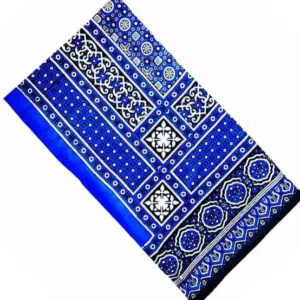
سرائیکی ثقافت ڏیہاڑ, also known as Saraiki Ajrak Day، ہر سال مناوندے نیں 6 مارچ across the Saraiki Belt of Pakistan. On this day, millions of people in South Punjab and beyond wear the iconic blue Saraiki Ajrak, dance the Jhoomar, recite the poetry of Khwaja Ghulam Farid, and celebrate a civilisation whose roots reach back to the ancient Indus Valley. This guide explains what the day means, how it began, why the blue Ajrak matters, and how it is celebrated from Multan to Dera Ismail Khan.
Quick Facts
| Official Name | سرائیکی ثقافت ڏیہاڑ |
| Other Names | Saraiki Ajrak Day, Saraiki Cultural Day, Ajrak Festival |
| Date | 6 March (annually) |
| First Celebrated | Early 2010s (widely reported from 2013 onwards) |
| خطہ | Saraiki Belt: South Punjab, parts of Khyber Pakhtunkhwa, Sindh and Balochistan |
| زبان | سرائیکی |
| Traditional Dress | Blue Saraiki Ajrak, shalwar kameez, turban (patka/pag), khussa |
| علامت | Blue Saraiki Ajrak (Sajarak) |
| Main Cities | Multan, Bahawalpur, Dera Ghazi Khan, Rahim Yar Khan, Muzaffargarh, Dera Ismail Khan |
| Main Activities | Wearing Ajrak, Jhoomar dance, rallies, folk music, poetry recitals, seminars, handicraft stalls |
Table of Contents
- What is Saraiki Culture Day?
- History and Origins
- Why the Blue Saraiki Ajrak is Important
- How Saraiki Culture Day is Celebrated
- Celebrations Across the Saraiki Belt
- Traditional Dress
- Traditional Food
- Music and Dance
- Famous Saraiki Personalities
- Why the Day Matters
- Frequently Asked Questions
- References
What is Saraiki Culture Day?
Saraiki Culture Day is an annual celebration of the language, traditions, dress, music, poetry and identity of the Saraiki people. The سرائیکی زبان is spoken by tens of millions of people, with its heartland in the districts of South Punjab — a region its people affectionately call the Saraiki Waseeb.
The purpose of the day is threefold. First, it is a celebration: a joyful public expression of a culture famous for its hospitality, Sufi spirituality and soulful music. Second, it is an act of preservation: by wearing the Ajrak, dancing the Jhoomar and reciting Saraiki poetry in public, communities pass living traditions to the next generation. Third, it is a statement of recognition: organisers have long demanded that Saraiki Culture Day be acknowledged at the government level, in the same way Sindhi and Punjabi culture days are celebrated.
Because the blue Ajrak shawl is the centrepiece of the celebrations, the occasion is popularly known as Saraiki Ajrak Day — the two names refer to the same event.
History and Origins
Compared with the ancient culture it celebrates, the day itself is young. Celebrations of a dedicated Saraiki cultural day were reported from the early 2010s, and news coverage records that the tradition took hold from around 2013, when Saraiki writers and cultural activists began promoting the idea of a day devoted to local culture — inspired in part by the huge success of Sindhi Culture Day, which Sindh has celebrated each December since 2009.
The veteran Saraiki writer and journalist Zahoor Dhareja, chairman of the Saraikistan National Council, is widely credited as the founder of the Ajrak Festival and remains one of the day’s leading voices. Speaking at Ajrak Day ceremonies in Multan, he has repeatedly demanded that the day be recognised officially, arguing that the Saraiki people are heirs to a civilisation thousands of years old and deserve the same cultural recognition as other communities in Pakistan.
Timeline
- 2009: Sindhi Culture Day (Ekta Day) begins in Sindh, demonstrating the power of a mass cultural celebration built around the Ajrak.
- Early 2010s: Saraiki activists, writers and student groups begin marking a Saraiki cultural day; the blue Ajrak emerges as its symbol.
- 2013 onwards: Celebrations become an annual tradition, with the main gatherings in Multan and other cities of South Punjab.
- 2010s–2020s: The day spreads to schools, universities, arts councils and social media; the hashtag #SaraikiCultureDay trends every March.
- 2024: The Prime Minister of Pakistan and the Chief Minister of Punjab issue official congratulatory messages, and the Lahore Arts Council (Alhamra) hosts a Saraiki Culture Day ceremony — milestones in mainstream recognition, even though the day still awaits formal government status.
Minor variations in the date appear in early reports — some events in the mid-2010s were held on 7 March — but 6 March is now firmly established as the annual date, confirmed by national media and official messages.
Why the Blue Saraiki Ajrak is Important
No symbol is more closely tied to the day than the blue Saraiki Ajrak, also called the سجرک. It is a block-printed shawl in the wider Ajrak textile tradition of the Indus River basin — a craft whose ancestry is often traced to the Indus Valley Civilisation, where the famous “Priest-King” statue of Mohenjo-daro wears a patterned robe strikingly similar to Ajrak designs.
History and name
The word اجرک is generally derived from the Arabic azraq, meaning “blue.” A popular local account, related by the Saraiki researcher Professor Shaukat Mughal, holds that when Arab soldiers arrived at Multan in the 8th century they saw locals wrapped in blue shawls and exclaimed “azraq, azraq” — and the name stuck. Like many origin stories, this is tradition rather than documented history, but it captures a truth: the deep blue shawl has been part of the region’s visual identity for a very long time.
The specifically سرائیکی Ajrak is a more recent development, inspired by the neighbouring Sindhi Ajrak. Where the Sindhi shawl is dominated by deep crimson and black, the Saraiki Ajrak is instantly recognisable by its blue and cyan colour scheme, chosen to give the Saraiki Waseeb a symbol of its own.
Colours and patterns
Saraiki Ajrak features deep cyan, navy blue, and black palettes with striking crimson accents. These block-printed shawls use geometric and floral motifs, deeply rooted in the Indus Valley. They symbolize regional pride in Southern Punjab, typically worn as scarves, turbans, or dupattas during cultural events.
How it is made
Traditional Ajrak printing is a slow, skilled craft: fabric is washed and treated, then printed on both sides with hand-carved wooden blocks using resist-printing techniques and dyes traditionally derived from indigo and madder, with repeated dyeing, washing and sun-drying stages. Modern Saraiki Ajraks range from hand-blocked artisan pieces to machine-printed shawls produced for the huge demand around 6 March.
Modern use
Today the blue Ajrak appears far beyond the shawl: caps (topi), turbans, dupattas, dresses, wall hangings, wedding stages and even vehicle decoration. Presenting an Ajrak to a guest is a gesture of honour — at official ceremonies, dignitaries are welcomed by having an Ajrak placed over their shoulders. A newer “Alphabet Ajrak,” printed with the letters of the Saraiki script, has also grown popular as a statement of linguistic pride.
How Saraiki Culture Day is Celebrated
Celebrations blend festivity with cultural advocacy. The most common activities include:
- Wearing the Ajrak: men, women and children drape the blue shawl or wear Ajrak-print caps and dresses in streets, schools, offices and public squares.
- Cultural rallies and gatherings: processions and open-air assemblies, the best known centred on Multan, where writers, students, political workers and civil society gather — the Multan Tea House gathering has become a fixture of the day.
- Jhoomar dance: circles of dancers perform the region’s graceful traditional dance to the beat of the dhol.
- Folk music: performances of kafis and folk songs, from the classics of Pathanay Khan to the anthems of Attaullah Khan Esakhelvi.
- Poetry recitals (mushairas): readings of Khwaja Ghulam Farid, Shakir Shuja Abadi and contemporary Saraiki poets.
- Seminars and literary sessions: universities, press clubs and arts councils host discussions on Saraiki language, literature and history.
- Handicraft exhibitions and stalls: displays of Ajrak, embroidery, pottery and camel-skin work; the Multan Arts Council has hosted craft stalls on the day.
- Book fairs promoting Saraiki-language publishing.
- Educational events: school assemblies, tableau performances and dress-up days introducing children to their heritage.
- Social media campaigns: hashtags such as #SaraikiCultureDay and #SaraikiAjrak trend nationally as people share photographs in blue.
Celebrations Across the Saraiki Belt
The day is celebrated in every district of the سرائیکی خطہ. Highlights city by city:
ملتان
ملتان, the cultural capital of the Saraiki Waseeb, hosts the flagship celebrations: the Tea House gathering, Arts Council programmes, rallies, Jhoomar performances and craft stalls beneath the city’s shrine-studded skyline.
بہاولپور
وچ بہاولپور, celebrations unfold against the backdrop of Noor Mahal and the former princely state’s heritage, with university students and literary societies playing a leading role.
ڈیرہ غازی خان
ڈیرہ غازی خان, gateway between Punjab, Balochistan and KP, marks the day with rallies and cultural shows that reflect its blend of Saraiki and Baloch traditions.
Muzaffargarh
وچ Muzaffargarh, between the Chenab and the Indus, schools and local organisations arrange Ajrak distributions, folk music and Jhoomar circles.
رحیم یار خان
رحیم یار خان celebrates at the edge of Cholistan, where desert folk traditions, camel decoration and Saraiki song meet.
Lodhran
Lodhran holds school events and community gatherings along the Sutlej, with local poets reciting for enthusiastic crowds.
Khanewal
وچ Khanewal, railway-town community halls and colleges host cultural programmes and Ajrak ceremonies.
Layyah
Layyah, in the Thal, is known for passionate literary sessions — fitting for the home district of poet Shakir Shuja Abadi.
Rajanpur
Rajanpur, Punjab’s southernmost district, marks the day with tribal and riverine communities joining rallies in blue.
Vehari
وچ Vehari, the cotton belt turns blue for a day as schools and bazaars celebrate with music and dress-up events.
Bhakkar
Bhakkar celebrates with Thal-desert folk traditions, Jhoomar and community feasts.
Dera Ismail Khan
Dera Ismail Khan carries the celebration into Khyber Pakhtunkhwa, proof that the Saraiki Waseeb crosses provincial lines; the city adds its famous Sohan Halwa to the festivities.
Traditional Dress
On 6 March the region dresses in its identity:
- Saraiki Ajrak: the blue block-printed shawl worn over the shoulders by men and as a dupatta or wrap by women — the unmistakable emblem of the day.
- Turban (pag/patka): a mark of honour and manhood in rural Waseeb, often tied in Ajrak print for the occasion.
- Shalwar kameez: the everyday dress of the region, in white or bright colours, paired with the Ajrak.
- Women’s dress: vibrant embroidered shirts, ghagras and chunri dupattas, with the mirror-work and threadwork for which South Punjab’s artisans are renowned.
- Khussa: hand-stitched leather shoes, often embroidered — Multani khussa is famous across Pakistan.
Traditional Food
No Saraiki celebration is complete without the region’s table:
- Sohan Halwa: the dense, ghee-rich sweet of Multan and Dera Ismail Khan, the region’s most famous edible export and a favourite gift on the day.
- Sajji: whole roasted chicken or lamb, popular across the western districts bordering Balochistan.
- Saag and makki roti: slow-cooked greens with maize flatbread, the classic winter comfort food of rural Punjab.
- Lassi: the tall glass of churned yogurt that fuels the Waseeb’s farmers.
- Dates: the palm groves of Muzaffargarh, Dera Ismail Khan and Jhang produce prized varieties.
- Mangoes: South Punjab is Pakistan’s mango heartland — Multan and Rahim Yar Khan orchards grow celebrated varieties such as Chaunsa and Anwar Ratol.
- Churi: crumbled roti kneaded with ghee and sugar or jaggery, a beloved rustic treat.
Music and Dance
Jhoomar is the signature dance of the Saraiki Belt: dancers move in a slow, swaying circle around the drummer, arms rising and falling like the rhythm of the river. It is performed at weddings, harvest festivals and, above all, on Culture Day, when public squares fill with spontaneous Jhoomar circles.
سرائیکی لوک موسیقی is built on the kafi — the Sufi lyric form perfected by Khwaja Ghulam Farid — and on romantic folk tales sung to traditional instruments: the dhol, alghoza (double flute), iktara, chimta, sarangi and harmonium. On Culture Day, stages across the region echo with the repertoire of legends like Pathanay Khan and Surraiya Multanikar alongside modern stars.
Famous Saraiki Personalities
The day honours the people who gave the culture its voice, among them:
- Khwaja Ghulam Farid (1845–1901): the towering Sufi poet of the Saraiki language, whose kafis remain the soul of the Waseeb — explore more on our Saraiki poetry صفحے تے ڳولو۔
- Shakir Shuja Abadi: the most celebrated living Saraiki poet, whose verses of struggle and dignity are recited at every gathering.
- Pathanay Khan (1926–2000): legendary kafi singer who carried Farid’s poetry to the whole nation.
- Surraiya Multanikar: pioneering folk vocalist of Multan, honoured with the Pride of Performance.
- Attaullah Khan Esakhelvi: one of Pakistan’s best-selling folk voices, whose Saraiki songs made the language beloved far beyond the Waseeb.
- Zahoor Dhareja: writer, journalist and cultural activist credited as the founder of the Ajrak Festival and a driving force behind Saraiki Culture Day itself.
Why the Day Matters
Saraiki Culture Day is more than a festival. For a community whose language is spoken by tens of millions yet still fights for institutional recognition, the day is an annual assertion that the culture of the Waseeb — its تاریخ، ایہدی شاعری، ایہدی موسیقی and its crafts — is a living treasure of Pakistan. Congratulatory messages from the Prime Minister and the Chief Minister of Punjab in recent years, and official ceremonies at institutions like Alhamra in Lahore, show how far the day has travelled from its activist beginnings; the campaign to have it formally recognised at government level, as Sindhi Culture Day is, continues.
For visitors, the first week of March is one of the best times to experience South Punjab — see our South Punjab tourism guide and photo gallery to plan a trip.
Frequently Asked Questions
سرائیکی ثقافت ڏیہاڑ کڈاں مناوندے نیں؟
Saraiki Culture Day is celebrated every year on 6 March across the Saraiki Belt of Pakistan.
What is Saraiki Ajrak Day?
Saraiki Ajrak Day is another name for Saraiki Culture Day. Because wearing the blue Saraiki Ajrak is the centrepiece of the celebrations, the two names are used interchangeably.
Why is the Saraiki Ajrak blue?
Blue was adopted to give the Saraiki region a distinct identity within the wider Indus Ajrak tradition. The word Ajrak itself is linked to the Arabic word azraq, meaning blue, and the colour echoes the sky, the Indus River and the blue tilework of Multan’s shrines.
What is the difference between Sindhi Ajrak and Saraiki Ajrak?
Both belong to the same Indus Valley block-printing tradition. The Sindhi Ajrak is dominated by deep red and black, while the Saraiki Ajrak (Sajarak) uses a blue and cyan colour scheme and is a more recent adaptation inspired by the Sindhi original.
Who started Saraiki Culture Day?
The day grew out of the efforts of Saraiki writers and cultural activists in the early 2010s. The writer and journalist Zahoor Dhareja, chairman of the Saraikistan National Council, is widely credited as the founder of the Ajrak Festival.
When did Saraiki Culture Day start?
News reports record annual celebrations from around 2013 onwards, inspired in part by Sindhi Culture Day, which began in 2009.
Where is Saraiki Culture Day celebrated?
Throughout the Saraiki Belt — Multan, Bahawalpur, Dera Ghazi Khan, Muzaffargarh, Rahim Yar Khan, Lodhran, Khanewal, Layyah, Rajanpur, Vehari, Bhakkar and Dera Ismail Khan — as well as by Saraiki communities in Lahore, Karachi, Islamabad and overseas.
Is Saraiki Culture Day an official public holiday?
No. It is a community-driven celebration, though it has received official congratulatory messages from national and provincial leaders, and organisers continue to campaign for formal government recognition.
What is Jhoomar?
Jhoomar is the traditional dance of the Saraiki region, performed in a slow, swaying circle around a drummer. It is the signature dance of Culture Day celebrations.
What do people wear on Saraiki Culture Day?
The blue Saraiki Ajrak is essential, worn over shalwar kameez. Many also wear Ajrak-print caps and turbans, embroidered dresses, and Multani khussa shoes.
What foods are associated with the Saraiki region?
Multani and Dera Ismail Khan Sohan Halwa, sajji, saag with makki roti, lassi, dates, churi, and the famous mangoes of South Punjab.
Who are the most famous Saraiki poets and singers?
Khwaja Ghulam Farid is the greatest Saraiki poet; Shakir Shuja Abadi is the most celebrated living poet. Pathanay Khan, Surraiya Multanikar and Attaullah Khan Esakhelvi are the region’s most beloved singers.
What does “Saraiki Waseeb” mean?
Waseeb is a Saraiki word for homeland or cultural region — the Saraiki Waseeb refers to the Saraiki-speaking belt centred on South Punjab.
How can I buy an authentic Saraiki Ajrak?
Ajraks are sold in the bazaars of Multan, Bahawalpur and other Waseeb cities, especially around early March, and by numerous Pakistani online craft stores. Hand-block-printed pieces cost more than machine-printed ones.
How can tourists experience Saraiki Culture Day?
Visit Multan in the first week of March for the main gatherings, wear a blue Ajrak, and combine the trip with the shrines of Multan, Noor Mahal in Bahawalpur, and Derawar Fort in Cholistan. See our tourism guide for details.
References
- “Seraiki culture day celebrated” — Dawn Newspaper — dawn.com/news/1819682 — accessed 3 July 2026.
- “Saraiki culture day celebrated” — Dawn Newspaper — dawn.com/news/1740780 — accessed 3 July 2026.
- “Saraiki Culture Day observed” — Radio Pakistan (Government of Pakistan) — radio.gov.pk — accessed 3 July 2026.
- “Alhamra Observed Saraiki Culture Day” — Information & Culture Department, Government of the Punjab — icd.punjab.gov.pk — accessed 3 July 2026.
- “Saraiki Culture Day Observed” — UrduPoint News — urdupoint.com — accessed 3 July 2026.
- “People of southern Punjab celebrate Saraiki Ajrak Day” — PakVoices — pakvoices.pk — accessed 3 July 2026.
- “Saraiki ajrak” — Wikipedia — en.wikipedia.org/wiki/Saraiki_ajrak — accessed 3 July 2026.
- “Sajarak” — Wikipedia — en.wikipedia.org/wiki/Sajarak — accessed 3 July 2026.
Note: the account of the word Ajrak’s origin at Multan is a popular tradition related by regional researchers and is presented as such, not as documented history.