Lodhran is a city and district in southern Punjab, Pakistan, lying on the north bank of the Sutlej River just south of Multan. A historic railway junction town, it sits amid one of the country’s richest cotton- and mango-growing belts and is firmly part of the Saraiki cultural heartland.
Key Landmarks
Lodhran’s identity is tied to its railway heritage and its historic tehsil towns.
Ancient town associated with early history of the region, including the era of Raja Dahir and Alexander-period settlements.
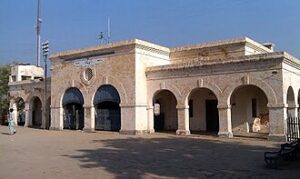
Historic tehsil town on the railway line with a colonial-era station.
History and Heritage
Lodhran grew as a railway junction where the Karachi line meets the branch across the Sutlej toward Bahawalpur, and it became a separate district in 1991. Its tehsils, especially Kahror Pacca, carry much older histories connected with ancient trade routes along the Sutlej valley.
Culture and Economy
The district is quintessentially Saraiki in language and custom, known for shrine culture, folk poetry, and hospitality. Cotton, wheat, sugarcane, and some of Pakistan’s finest mangoes drive the economy, supported by ginning factories and agricultural markets.
What Makes Lodhran Distinctive
Lodhran is the quiet crossroads of the region — a compact district where the railway age, the Sutlej river landscape, and deep rural Saraiki traditions meet within sight of Multan’s urban orbit.
Nearby Cities and Regional Connections
The district borders Multan across the Sutlej belt and links directly to Bahawalpur. Explore: ملتان, بہاولپور, Vehari, Khanewal.
Present-Day Role
Today Lodhran is a district headquarters serving a largely agricultural population, with improving road links on the N-5 corridor, growing markets, and educational institutions that connect its towns to Multan’s economy.
Sources
Images are used via Wikimedia Commons; click any landmark title or source link above for the original page and license details.