this is a city in southern Punjab, Pakistan, just northeast of Multan, best known as one of the country’s great railway junctions. Built up in the canal-colony era, it sits in a fertile cotton and wheat belt with a history that reaches back to some of the oldest towns of the Punjab.
Key Landmarks
Khanewal’s heritage spans ancient ruins and living shrine towns.
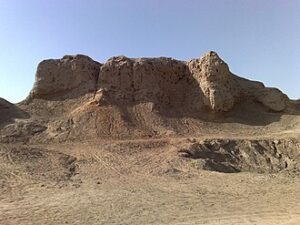
Ancient mound-town associated with Alexander the Great’s campaign along the Ravi.
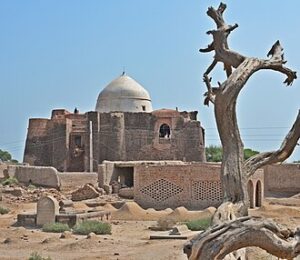
Kabirwala — Shrine of Khalid Walid
Town noted for the pre-Mughal shrine of Khalid Walid, an early masterpiece of brick architecture.
History and Heritage
Modern Khanewal grew with the railways and canals of the late 19th and early 20th centuries, becoming a major junction on the Karachi–Lahore main line. Yet its district contains far older layers: Tulamba’s ruins date to antiquity, and Kabirwala’s shrine architecture predates the Mughals.
Culture and Economy
The district mixes Saraiki and Punjabi speech and customs, with strong shrine and fair traditions. Cotton ginning, textiles, agriculture, and rail-linked trade drive the economy, and Khanewal’s markets serve a wide rural hinterland.
What Makes Khanewal Distinctive
This is the rail heart of the region — a junction city whose locomotive heritage sits beside two-thousand-year-old mounds, giving it a layered identity few canal-colony towns can match.
Nearby Cities and Regional Connections
Khanewal lies on the main line just outside Multan. Explore: ملتان, Vehari, Lodhran.
Present-Day Role
Today Khanewal remains a key railway junction and district headquarters, with agro-industry, expanding education, and quick motorway access to Multan strengthening its role in the regional economy.
Sources
Images are used via Wikimedia Commons; click any landmark title or source link above for the original page and license details.