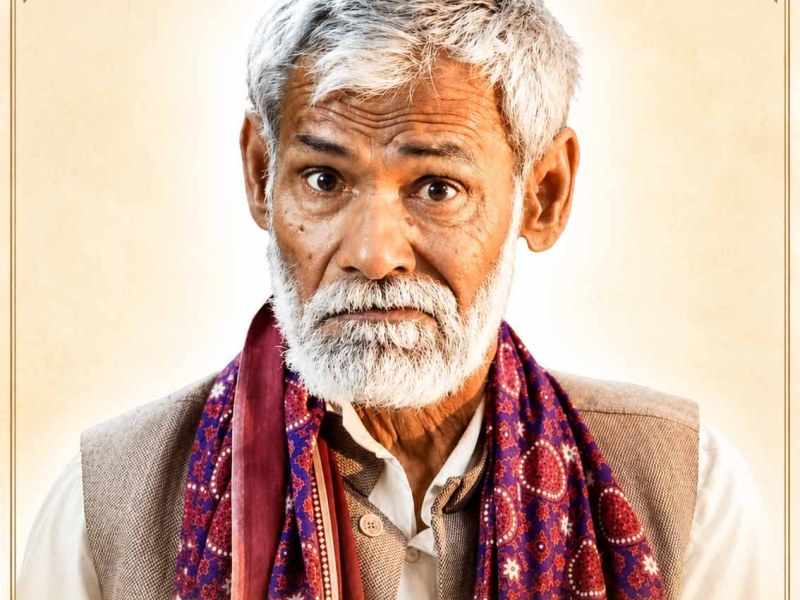
Shakir Shujaabadi (b. 1954) is the best-known living voice in Saraiki poetry — a self-taught poet from Shujabad, near Multan, whose plainspoken verse has made him a household name across the Saraiki Wasaib.
Early Life and Struggle
Born Muhammad Shafi on 25 February 1954 in Shujabad, he grew up with a physical disability affecting his speech. He left school early and worked as a labourer and fruit-seller to support himself, including a period in Karachi, before poetry began to take shape in his mind during years of hardship.
Rise to Prominence
Shakir began reciting verses at a local shrine before his talent for rhyme and refrain (qafia and radeef) carried him to the mushaira stage. His breakthrough recital came in 1986, and by 1991 he was headlining the All-Pakistan Mushaira, cementing his place as the leading Saraiki poet of his generation.
Themes: The Voice of the Common Person
Where classical Sufi poets sang of the desert and the divine Beloved, Shakir turned his verse toward the everyday struggles of ordinary people — poverty, inequality, injustice and the uncertainty of fate. His short, aphoristic couplets are widely shared and memorised well beyond literary circles, giving him a popular reach few Saraiki poets have matched and a reputation as the language’s most quoted contemporary voice.
Recognition
Shakir has received Pakistan’s Presidential Award for Pride of Performance twice, in recognition of his contribution to Saraiki literature, and his collected works — including Khuda Janey, Shakir Diyan Ghazlan and Shakir De Dohray — remain widely read and quoted throughout the region.
Legacy
Often called the greatest Saraiki poet since Khwaja Ghulam Farid, Shakir Shujaabadi is credited with carrying Saraiki poetry to a mass audience through radio, mushairas and, more recently, social media. Explore more of the region’s poetic tradition on our Saraiki poetry page, and discover his hometown on our Multan city page.
Shakir Shujaabadi at a Glance
- Born: 25 February 1954, Shujabad, near Multan
- Real name: Muhammad Shafi
- Known for: Plainspoken, socially conscious Saraiki verse
- Notable works: Khuda Janey, Shakir Diyan Ghazlan, Shakir De Dohray
- Honours: Presidential Award for Pride of Performance (twice)