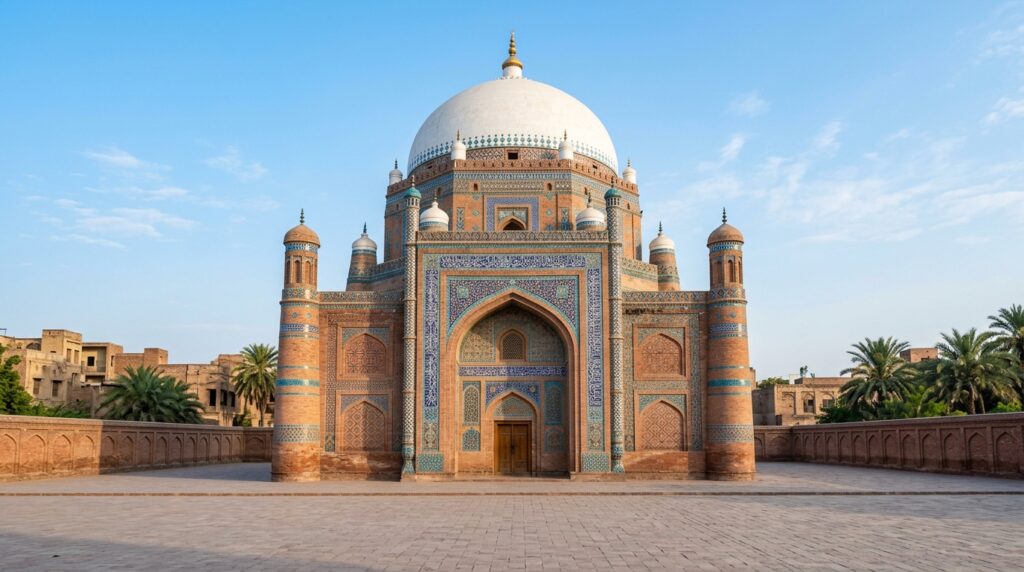
The Shrine of Bahauddin Zakariya is one of the most respected spiritual landmarks in Pakistan and a treasured symbol of Saraiki culture. Located in the historic city of Multan, often called the “City of Saints,” the shrine attracts millions of visitors every year. It represents centuries of Islamic scholarship, Sufi teachings, peace, and devotion.
For the people of the Saraiki region, the shrine is more than a religious monument. It is a living heritage that reflects the history, traditions, and spiritual identity of South Punjab.
Who Was Bahauddin Zakariya?
Hazrat Bahauddin Zakariya (1170–1268 CE) was a renowned Muslim scholar, Sufi saint, and preacher. He belonged to the Suhrawardiyya Sufi order and played a major role in spreading Islam through wisdom, education, tolerance, and compassion.
Born in Kot Karor, near Layyah in present-day Punjab, he traveled to many Islamic centers to gain knowledge before settling in Multan. His teachings encouraged people to live honest, peaceful, and morally responsible lives.
Thousands of students studied under him, and his influence spread throughout South Asia.
History of the Shrine
The Shrine of Bahauddin Zakariya was built during the 13th century and remains one of the oldest surviving monuments in Multan.
After the saint’s passing in 1268 CE, his followers constructed the mausoleum on one of Multan’s highest points near the ancient fort. Over the centuries, rulers and devotees restored and preserved the shrine after earthquakes and conflicts, ensuring its beauty remained intact.
Today, it stands as one of Pakistan’s most important historical and religious sites.
Architecture of the Shrine

Key architectural features of the Shrine of Bahauddin Zakariya.
The shrine is an outstanding example of early Islamic architecture in South Asia.
Its unique design includes:
- A large square base built with baked bricks.
- Thick walls for strength and durability.
- A magnificent white hemispherical dome.
- Beautiful blue glazed tiles decorating the exterior.
- Traditional wooden carvings and artistic entrances.
- Geometric Islamic patterns and elegant calligraphy.
The combination of blue tiles, red bricks, and white dome creates one of the most recognizable skylines in Multan.
Spiritual Importance
The shrine is a major center of Sufi spirituality.
Visitors come from across Pakistan and abroad to:
- Offer prayers.
- Seek blessings.
- Reflect in a peaceful environment.
- Learn about Islamic teachings.
- Attend religious gatherings.
The shrine promotes values of love, unity, humility, generosity, and respect for humanity—principles that remain central to Sufism.
Urs Celebration
Every year, the Urs (annual death anniversary) of Hazrat Bahauddin Zakariya is celebrated with great devotion.
During the Urs:
- Thousands of pilgrims visit Multan.
- Religious scholars deliver lectures.
- Quran recitation ceremonies are held.
- Sufi devotional poetry is recited.
- Traditional food is distributed among visitors.
- Spiritual gatherings continue day and night.
The Urs is both a religious event and a cultural celebration of the Saraiki region.
Role in Saraiki Culture
The shrine holds a special place in Saraiki identity.
For centuries, it has inspired:
- Saraiki poetry.
- Folk music.
- Traditional storytelling.
- Islamic education.
- Hospitality and community service.
- Local arts and crafts.
Many Saraiki poets have praised Hazrat Bahauddin Zakariya for spreading peace and knowledge throughout the region.
Tourism in Multan
The shrine is one of the top tourist attractions in Multan.
Visitors often combine their trip with nearby historical landmarks, including:
- Multan Fort
- Ghanta Ghar (Clock Tower)
- Hussain Agahi Bazaar
- Shrine of Shah Rukn-e-Alam
- Shrine of Shah Shams Sabzwari
These sites together showcase the rich history of the Saraiki civilization.
Best Time to Visit
The ideal time to visit is from October to March when the weather is pleasant.
Visitors should:
- Dress modestly.
- Respect local customs.
- Remove shoes before entering.
- Maintain silence inside the shrine.
- Ask permission before photographing people.
Why the Shrine Matters Today
The Shrine of Bahauddin Zakariya continues to inspire millions through its timeless message of peace, tolerance, and spiritual wisdom. It stands not only as an architectural masterpiece but also as a symbol of the rich Saraiki heritage that has flourished in South Punjab for centuries.
Whether you are a pilgrim, historian, photographer, or traveler, a visit to this sacred shrine offers a unique opportunity to experience the heart of Multan’s spiritual legacy.
Frequently Asked Questions (FAQ)
Where is the Shrine of Bahauddin Zakariya located?
The shrine is located in the old city of Multan, Punjab, Pakistan.
Who was Bahauddin Zakariya?
He was a famous 13th-century Sufi saint, Islamic scholar, and founder of the Suhrawardiyya order in Multan.
Why is the shrine famous?
It is famous for its spiritual importance, unique architecture, historical value, and contribution to Saraiki culture.
Can tourists visit the shrine?
Yes. The shrine is open to both local and international visitors who respect its religious traditions.
When is the Urs celebrated?
The Urs is observed annually according to the Islamic calendar and attracts thousands of devotees from across Pakistan.
Conclusion
The Shrine of Bahauddin Zakariya is one of the greatest treasures of the Saraiki region. It represents centuries of faith, scholarship, culture, and architectural excellence. As one of Multan’s most iconic landmarks, it continues to preserve the spiritual traditions that define the identity of South Punjab.
For anyone interested in the history, culture, and spirituality of the Saraiki people, the Shrine of Bahauddin Zakariya remains an unforgettable destination and a proud symbol of Pakistan’s rich cultural heritage.